
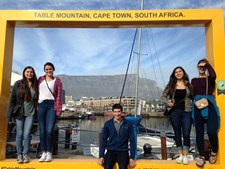
More photos from this internship can be found here.
Work at the intersection of nature, science, and conservation in Cape Town — home to one of the most unique ecosystems in the world. This internship offers hands-on experience in environmental conservation, marine research, and wildlife protection within and around Table Mountain National Park, one of the most biodiverse regions on the planet.
Interns are placed in one of the park’s partner divisions, with opportunities tailored to their interests and experience. Roles may involve land and marine conservation, research, education, or ecological monitoring. Each placement provides valuable professional experience at a reputable organisation, while contributing to meaningful conservation efforts that safeguard South Africa’s natural heritage.
SANCCOB — Penguin Nursery Internship
SANCCOB is a registered non-profit whose primary objective is to reverse the decline of seabird populations through the rescue, rehabilitation, and release of ill, injured, abandoned, and oiled seabirds — with a particular focus on the endangered African penguin. SANCCOB's work areas include 24/7 rescue, rehabilitation of 2,400+ seabirds annually, chick rearing, education, and ongoing research.
Two Oceans Aquarium
Opened in November 1995, the Two Oceans Aquarium is one of Cape Town's top tourist attractions, housing over 3,000 living sea animals. It is a leading environmental education centre in South Africa, internationally respected for its high standards of animal husbandry.
Kenilworth Racecourse Conservation Area (KRCA)
One of Cape Town's most important conservation sites, protecting a rare fragment of Cape Flats Sand Fynbos — a critically endangered vegetation type found only in the Western Cape. KRCA serves as a sanctuary for numerous endemic species and a living laboratory for ecological research.
https://www.facebook.com/KenilworthRacecourseConservationArea
Job responsibilities will vary widely depending on placement.
SANCCOB — Penguin Nursery
Two Oceans Aquarium — Daily Tasks
Two Oceans Aquarium — Occasional Tasks
KRCA — Daily Tasks
KRCA — Occasional Tasks
Academic Background
Skills / Experience
Estimated One-Time Expenses
* Check with your university's Global Opportunities Office for their specific fee.
Estimated Monthly Expenses
The Host Site Fee Includes
Interns are accommodated in fully furnished, student-oriented housing located in Observatory, one of Cape Town's most vibrant and culturally diverse neighbourhoods. Known locally as "Obz," this area is popular among students and young professionals for its lively atmosphere, cafés, and creative energy. Each intern has a private, fully furnished room and shares common living spaces, including a kitchen, lounge, bathroom, and laundry facilities.
Housing includes 24-hour security and regular housekeeping, with a housekeeper visiting at least twice a week, ensuring a safe and comfortable environment. Interns pay a $100 cleaning fee and a $250 refundable housing deposit directly to the housing company (refunded if no damage occurs).
Wi-Fi is available at $20 per month for up to two devices, though speed and reliability may not match US standards. Other utility costs are split among housemates. The central location offers easy access to the city centre, beaches, and surrounding natural attractions, making it both convenient and culturally engaging.
"It was easy to see from the beginning that the staff and volunteers at the aquarium were like a big family. A typical day started with cleaning the exhibits before opening. Food preparation involved gutting squid and prepping fish, red bait, prawns, and mussels — it was important that each food type was prepared correctly. There was rarely a day that went exactly as expected. Just when I thought I knew how my day would go, I'd be invited on a collecting trip or asked to help with something entirely new. I always tried to keep myself open to help wherever I was needed, and I always benefited from doing something new."
—Katherine, IE3 intern from Oregon State University
"It was nerve-racking showing up to work in a foreign country without having spoken to anyone there beforehand. Fortunately, I quickly learned that the aquarium staff were looking out for me. My days started at 7am — waking at 5:45am to catch the train into town. By opening time, all exhibits had to be cleaned and preparations made for the public. Most days were far from typical, with activities ranging from a medical check-up on a rescued hawksbill turtle to helping transport rock hopper penguins to another enclosure. Cape Town is an amazing place. You will meet the nicest and most genuine people, who will care about you even though you are a foreigner."
—Alex, IE3 intern from Oregon State University
"A few of my most memorable experiences included visiting Boulders Beach and seeing African penguins waddling freely on the sand. Exploring South Africa is a once-in-a-lifetime adventure!"
—Hayes, IE3 intern from Oregon State University
"One of my favourite things about living here has been trying all the new cuisines — Cape Town is full of an abundance of cultures and flavours."
—Macey, IE3 intern from Oregon State University
"It can be overwhelming at times, yet it is so rewarding to see the animals you are working with get released back into the wild."
—Leilani, IE3 intern from Oregon State University
Important note: Because this is an individualised placement, applicants must describe in their cover letters the specific type of work and organisation that interests them. While we cannot guarantee to meet all of an applicant's wishes, the more information we have, the better a fit we are able to find.
Interns will be living in Observatory and will be supported by local host organisation Volunteer Adventure Corps (VAC). Living in Obz and experiencing its cultural and political energy will help interns better understand the complexities of the "new" South Africa.
Observatory is popular among the international student and volunteer community because it is located halfway between the city centre and the False Bay coastline. Visitors have a wide selection of outdoor activities to choose from, including hiking, surfing, scuba diving, golfing, outdoor concerts, and wine tasting. Cape Town is surrounded by oceans and is home to many beautiful beaches. The city centre, known to Capetonians as the "bowl" is the ideal place for cultural excursions. This programme offers a unique opportunity to gain professional experience while living and working in one of the world's most iconic cities.
Fall: April 15
Winter: September 15
Spring: November 15
Summer:
- Biology, Marine Biology, Conservation, Fisheries and Wildlife Science, Zoology, Environmental Science, Marine Science
- All interns are expected to demonstrate a positive attitude, flexibility, self-motivation, professionalism, maturity.