Comprised of over 7,100 islands in Southeast Asia, the Philippines is an archipelago filled with natural beauty and rich culture. Known for their warm
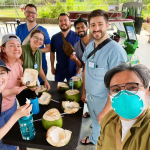
Photo credit CFHI
hospitality, contagious smiles and delicious food, Filipinos truly make the Philippines a very special country to visit.
To begin the program, you will complete a 1-week introduction in urban Manila, where you will be introduced to the Philippine health system, the country’s historical and sociocultural context through interactive teaching-learning sessions, visits to public and private health facilities and cultural excursions. You then travel to a remote island to learn frontline health systems management from preceptors in Rural Health Units and Barangay Health Stations, including municipal health officers, nurses and midwives. In this program, learn about Global and Public Health on the remote islands, also known as geographically isolated disadvantaged areas (GIDA), where healthcare facilities strive to deliver quality services while managing limited resources. Interns completing a 10-week program may experience two different remote island sites.
In this program, become immersed in Filipino culture while staying in a local guesthouse or with a homestay family and interacting with the local community. Visit here to learn more about CFHI’s internship in the Philippines.
Child Family Health International (CFHI) is a United Nations–recognized nonprofit that offers immersive, community-based Global Health Education Programs for students and emerging professionals. CFHI’s unique model emphasizes reciprocal partnerships with local health professionals and organizations, encouraging participants to grow in their understanding of health, culture, and global citizenship. Programs are currently offered in 10 countries (Argentina, Bolivia, Costa Rica, Ecuador, India, Mexico, South Africa, Uganda, Ghana, and the Philippines).
As a CFHI participant, you will observe local healthcare delivery, learn from experienced medical and public health professionals, and explore key global health topics through clinical shadowing and public health activities. CFHI programs help students explore health in diverse settings, build real-world skills like cultural humility and communication, and strengthen their foundation for future academic and professional success.
Intern responsibilities will include learning and completing all assignments given by the local team, completing pre-departure training so as to maximize competency development during the program, participating in engaged observation and shadowing in clinical settings, and professionally engaging in available projects and operations in any available NGO settings aligned with best practices for global health engagement.
CFHI's programs are rooted in strong ethical principles. The organization offers first and foremost a global learning opportunity, where interns learn by shadowing and engaging in clinical and public health rotations with local experts. In line with our commitment to best practices in global health, clinical rotations and public health activities in CFHI are strictly observational. Participants join the local team as learners and observers in the Philippines.
Estimated One-Time Expenses
Estimated Monthly Expenses
Budgeting Note: Estimated costs are based on typical internship-related costs and a modest standard of living. Each intern’s costs will vary based on lifestyle choices (eating out vs. cooking or eating provided meals, taking taxis vs. walking or taking the bus) and recreational spending (travelling on days off, expensive hobbies, etc.).
Additional Expense Information
CFHI program fees cover comprehensive pre-departure training and support, including access to interactive learning modules, cultural preparation tools, and virtual orientation led by CFHI’s team. On-site inclusions are housing, two meals per day, clinical and public health placements with oversight and supervision by local professionals, Spanish classes (in Latin America), local transportation to program activities, 24/7 local support, and international emergency medical and evacuation insurance. Participants are responsible for round-trip airfare, a third daily meal, visa and vaccination fees (if applicable), and any personal or leisure activities outside of the program. Learn more about CFHI scholarship opportunities here.
* This amount includes CFHI partner discount for IE3 students
** Fees vary based on medical history and insurance coverage
*** Check with your university's Global Opportunities Office for their pricing
All housing is screened by CFHI Local Coordinators and follows CFHI’s health and safety guidelines. For the first week and towards the end of the program, participants stay in a 3-star hotel near the bustling city center of Manila. On the remote island sites, participants will find their home away from home in either a homestay or dorm-type lodging. In some cases, CFHI scholars share a house or a room in the same homestay with fellow program participants of the same gender.
“I am extremely grateful for my experience in the CFHI Global Health in the Philippines program. From the people, the culture, and the history, I am undoubtedly impacted by the things I’ve learned and seen from my time in the program. We started with our first week in Manila where we got to learn about the different parts of the Philippine health system as well as how it fit into the context of Philippines history. The local coordinators, Dr.Katrina and Dr.Lopao were incredibly passionate about the information and history they were sharing with us which made our discussions super engaging and insightful! Not only that but I appreciated how they constantly checked in on us and made sure that we were okay throughout our time in Manila. The local team on the island were also incredibly welcoming. Our group rotated around the different Barangay Health Clinics and had the opportunity to learn about their unique health system on the island. In our free time we were able to explore the island, try different foods, and talk with the locals and BHW’s (Barangay Health Workers). In our 3 weeks here, something that I’ll never forget is the empathy and compassion of the entire health team. From each health clinic we visited and the conversations we had with the staff, it was clear to see how dedicated everyone was in providing the best care even with the obstacles that might come from being on an island. Furthermore, the context and insight provided by our local preceptor is something I know will continue to impact and shape how I think about medicine in the future and in my studies. Something I also really appreciated about CFHI as a whole, was their emphasis on ethical engagement. From their thorough onboarding and the support from the US team, Local team, and alumni, I felt assured that I wasn’t expected to do anything beyond observation. Especially as a second year undergrad, I felt that there wasn’t really anything medical that I would have been qualified to do. Something that really resonated with me was their rule of thumb “If you wouldn’t be allowed to do it here, don’t do it there”. This aspect is something that I feel is extremely unique to CFHI and what made me look into this program in the first place! Overall, my CFHI Global Health Program in the Philippines was extremely informative and worthwhile! I fully recommend it to anyone who is going into medicine or global health or is even just curious about it to apply for a program. Wherever you are in your journey, you are sure to gain valuable information and insight that will continue to impact you long after your program.”
Samantha C., 2025
“The Global Health in the Philippines program has been a one-of-a-kind experience for me! I was assigned to Carabao Island, San Jose, Romblon, Philippines, for a 4-week program that started last June 21, 2025, and ended on July 19, 2025. From the first week of the program in Manila, the local coordinator and the medical director gave us a quick overview of the historical context of health systems of the Philippines through visits to museums, hospitals, and public health discussions with primary care physicians. That gave us a context before our assignment on an island to have a grasp of the public health systems of the Philippines. From our 2nd to 4th week of the program, I shadowed our local preceptor doing general check-ups for the residents, and observed maternal and child health check-ups. It was truly eye-opening as it gave me first-hand experience in seeing how the patients and the healthcare workers work hand-in-hand to deliver healthcare on the island.
I really hope more people will be assigned to Carabao Island! The locals are very kind, friendly, and warm, and will really check up on you from time to time to see how your experiences on the island have been so far. The healthcare workers, particularly the Barangay Health Workers (BHWs), midwives, and nurses, are very hands-on as they always teach us new information about the locals’ perspective in healthcare. Moreover, the Municipal Health Officer, Doc Ian, is also very kind and hands-on. He is very friendly and tries to involve us through shadowing him in consultations with patients and check-ups with pregnant women to see how it works on the island. This became our weekly routine, and we truly enjoyed it. I miss everyone on the island! The location of the island is also very pretty; we always watch the sunset and walk by the beach after our duty to appreciate the beauty of the island. In the afternoon, we eat local snacks and delicacies to have a legit taste of Filipino food. One of the best things in the island is the halo-halo and barbeque, which I never tried before anywhere else in the Philippines. I wish I had more of those before leaving. I would highly recommend the program to anyone who is looking for a Global Health experience! If you are looking for a sign that this is the program fit for you, this is the sign! It gave me a new perspective and exposure in viewing primary healthcare, local health delivery, and local ethnomedicinal practices engraved into the island's culture in the Philippines. As a Health Sciences graduate, this public health experience is one of the best I have had that I will never trade for anything else. I hope more students, both local and international, get this experience at least once in their lives! I truly loved every single day and the people behind the success of the program. Thank you so much, CFHI, the local team, Doc Lopao, Doc Joel, Doc Kat, Doc Ian, and the generous sponsor of the Friends of the Philippines Scholarship for making this experience possible! I’m forever grateful!” Kenzo N., 2025