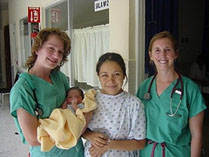
More photos from this internship can be found here
The southern state of Oaxaca is the most ethnically and linguistically diverse state in Mexico. It is home to a vibrant craft and art scene, outstandingly colorful festivities amongst beautiful architecture and unique cuisine. CFHI offers two programs in Mexico that showcase Mexico’s healthcare system and efforts to address health inequities, enhancing cultural competency for serving Mexican immigrant populations.
In Oaxaca City, join local healthcare professionals to learn about primary and hospital care, and preventive medicine at community-level clinics and hospitals serving low income populations. Observe Mexico’s three-tiered insurance system, its approach to the rapidly rising burden of non-communicable diseases, and various efforts to address health inequities. An intensive Spanish option is also available in this program.
Alternatively, experience the coastal town of Puerto Escondido, where you will learn about the healthcare system and Oaxacan culture through rotations in government-run primary care clinics known as Centros de Salud. The focus of this program is on community-based care and access to primary care services provided to low-income populations.
In both programs in Mexico, you will take language classes to enhance your Spanish speaking skills and immerse yourself in Mexican culture through cultural activities and living with local families. Visit here to learn more about CFHI Mexico programs.
Child Family Health International (CFHI) is a United Nations–recognized nonprofit that offers immersive, community-based Global Health Education Programs for students and emerging professionals. CFHI’s unique model emphasizes reciprocal partnerships with local health professionals and organizations, encouraging participants to grow in their understanding of health, culture, and global citizenship. Programs are currently offered in 10 countries (Argentina, Bolivia, Costa Rica, Ecuador, India, Mexico, South Africa, Uganda, Ghana, and the Philippines).
As a CFHI participant, you will observe local healthcare delivery, learn from experienced medical and public health professionals, and explore key global health topics through clinical shadowing and public health activities. CFHI programs help students explore health in diverse settings, build real-world skills like cultural humility and communication, and strengthen their foundation for future academic and professional success.
Intern responsibilities will include learning and completing all assignments given by the local team, completing pre-departure training so as to maximize competency development during the program, participating in engaged observation and shadowing in clinical settings, and professionally engaging in available projects and operations in any available NGO settings aligned with best practices for global health engagement.
CFHI's programs are rooted in strong ethical principles. The organization offers first and foremost a global learning opportunity, where interns learn by shadowing and engaging in clinical and public health rotations with local experts. In line with our commitment to best practices in global health, clinical rotations and public health activities in CFHI are strictly observational. Participants join the local team as learners and observers in Mexico.
Budgeting Note: Estimated costs are based on typical internship-related costs and a modest standard of living. Each intern’s costs will vary based on lifestyle choices (eating out vs. cooking or eating provided meals, taking taxis vs. walking or taking the bus) and recreational spending (travelling on days off, expensive hobbies, etc.). Visa fee is based on requirement of U.S. citizens.
The Host Site Fees include:
CFHI program fees cover comprehensive pre-departure training and support, including access to interactive learning modules, cultural preparation tools, and virtual orientation led by CFHI’s team. On-site inclusions are housing, two meals per day, clinical and public health placements with oversight and supervision by local professionals, Spanish classes (in Latin America), local transportation to program activities, 24/7 local support, and international emergency medical and evacuation insurance. Participants are responsible for round-trip airfare, a third daily meal, visa and vaccination fees (if applicable), and any personal or leisure activities outside of the program. Learn more about CFHI scholarship opportunities here.
* This amount includes CFHI partner discount for IE3 students
** Fees vary based on medical history and insurance coverage
*** Check with your university's Global Opportunities Office for their pricing
All housing is screened by CFHI Local Coordinators and follows CFHI’s health and safety guidelines. Participants in this program stay with carefully selected homestay families. Beds, bedding, and bathing towels are provided. Accommodation also includes 2 meals a day. In some cases, CFHI scholars share a house or a room in the same homestay with fellow program participants of the same gender.
All CFHI Latin America programs include Spanish language instruction as an integral part of the experience. Participants attend classes, practicing conversational and medical Spanish. These lessons support communication during the experience and deepen cultural understanding. For those looking to accelerate their language learning, an intensive Spanish option is available at most sites, offering additional hours of instruction.
“Spending a month in Oaxaca was more than just a medical experience—it was an immersion into a healthcare system deeply intertwined with culture, resourcefulness, and community. Shadowing physicians in clinics and hospitals, I saw firsthand how providers balanced modern medicine with traditional healing, where resources were scarce but compassion was abundant. I witnessed systemic health challenges firsthand—patients traveling hours for medical attention, hospitals working with limited supplies, and families playing a crucial role in their loved ones’ care. This experience taught me that medicine is not just about treating illness but about understanding the patient’s beliefs, environment, and access to care. Outside of the clinical setting, Oaxaca’s rich culture embraced me—dancing in the streets during festivals, tasting mole in a bustling mercado, and connecting with local healthcare teams who welcomed me as one of their own. This experience reinforced that medicine is universal, but healing is deeply personal, shaped by history, tradition, and human connection.” Natalie T., 2025
“My global health study abroad program consisted of about 2 months in Oaxaca city, Mexico and two weeks in Puerto Escondido. Not only did I learn more about health problems that affect the Mexican population but also how to spread prevention awareness. I had the opportunity to shadow doctors in clinics and a hospital and was exposed to the different obstacles that many of these clinics faced. Most of the clinics that I had visited had a limited amount of resources available and doctors wrote their clinic stories using typewriters. In Puerto Escondido our main goal was to learn about public health and how to incorporate it into the community. We were given the opportunity to give presentations to elementary school classes on sexual education and Vector-related illnesses. All of the children that we presented to, all showed the desire to learn more. Besides the academic part of the study abroad program, the culture in Oaxaca, Mexico is truly one of a kind. I was exposed to calendas (parades), dia de los muertos celebrations, and the beautiful beaches. Oaxacans are extremely respectful and easygoing, always greeting you when you walk by or eating. Overall, this was an amazing experience and I am very thankful that I was able to experience it.” Jocelyn C., 2023
Fall: April 15
Winter: September 15
Spring: November 15
Summer:
-See Qualifications/Requirements section